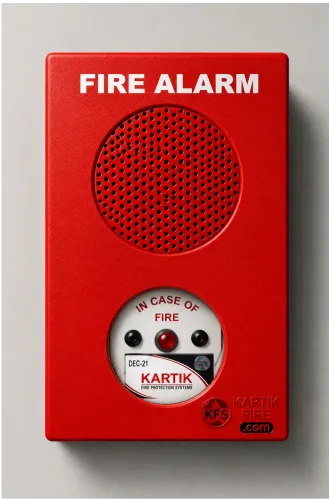
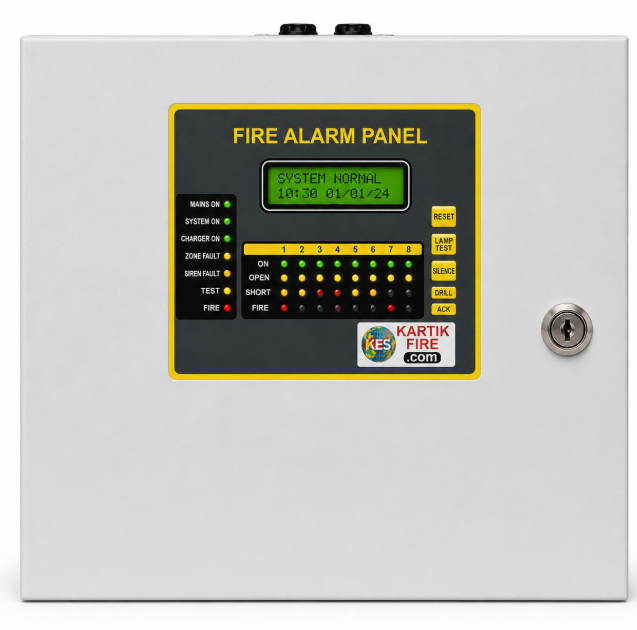
A fire emergency can develop rapidly, particularly in buildings containing combustible materials, electrical installations, storage areas, machinery, or large numbers of occupants. Early detection creates valuable time for warning people, initiating emergency procedures, and alerting the appropriate response teams.
A properly planned Kartik Fire Alarm System can therefore form an important part of a commercial or industrial building's overall fire protection strategy.
Detection Is the Beginning of the Response
A fire alarm system is not simply a bell or siren.
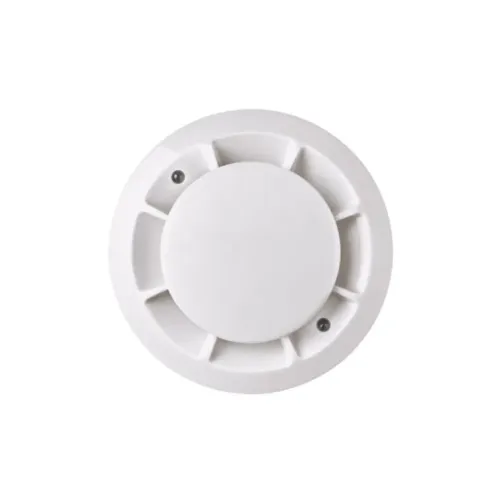
Depending on its design, the system may incorporate detectors, manual call points, control panels, notification devices, interfaces, power supplies, and other components.
When a fire-related condition is detected, information is communicated to the control equipment. The system can then activate alarms or perform other configured functions.
The objective is to reduce the time between the development of a fire and awareness of the emergency.
Why Early Warning Matters in Commercial Buildings
Commercial buildings may contain employees, visitors, customers, contractors, and people who are unfamiliar with the layout.
An effective alarm can give occupants an earlier opportunity to follow evacuation procedures.
This becomes especially important in multi-floor offices, shopping facilities, institutions, hotels, warehouses, and large commercial premises where occupants may be distributed across many rooms or zones.
Industrial Facilities Present Different Challenges
Factories and industrial properties can have noise, dust, heat, machinery, processes, high ceilings, and different types of combustible materials.
These conditions influence detector selection and system planning.
A device suitable for a clean office environment may not necessarily be the best choice for every industrial area. Designers need to consider both the fire risk and normal environmental conditions so that detection is effective without creating avoidable unwanted alarms.
Alarm Zoning Helps Identify the Affected Area
In larger buildings, dividing the property into appropriate fire alarm zones can help personnel understand where an alarm originated.
More advanced addressable systems may provide more specific information about the initiating device or location, depending on the system design.
This information can support faster investigation and emergency response.
Integration Can Strengthen the Overall Strategy
Depending on the building and approved fire safety design, alarm systems may interface with other equipment.
Examples can include selected ventilation controls, fire doors, lifts, suppression systems, public-address arrangements, or building management functions.
Integration should be properly engineered and tested because an incorrect cause-and-effect sequence can compromise the intended emergency response.
Maintenance Is Essential
Even a well-designed system can become unreliable if devices are damaged, obstructed, disconnected, or poorly maintained.
Facilities should establish periodic inspection, testing, and maintenance procedures based on applicable requirements and manufacturer recommendations.
Changes to room layouts, partitions, occupancy, processes, or equipment should also trigger a review of whether existing detection remains appropriate.
For businesses in Delhi and surrounding industrial and commercial areas, Kartik Fire Protection Private Limited provides fire protection equipment and system solutions for different property requirements.
The main value of a fire alarm system is time. Effective detection and notification can help occupants and responsible personnel become aware of a developing emergency sooner. That makes careful design, correct detector selection, installation, testing, and ongoing maintenance central to dependable fire protection.
Keywords