Smoke may develop before flames become obvious to people elsewhere in a building. This is one reason smoke detection is widely used as part of fire alarm systems in many commercial, institutional, and residential applications.
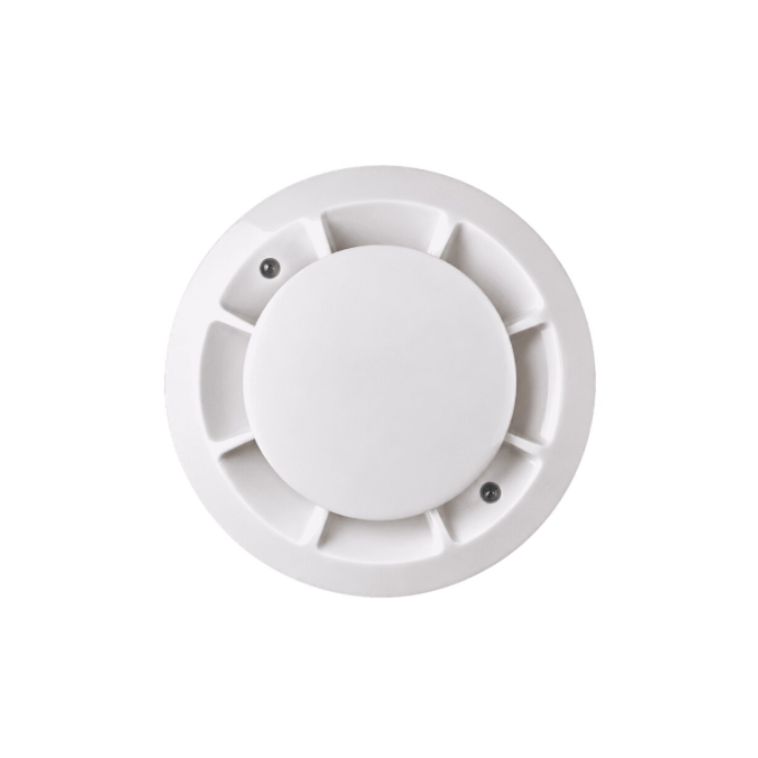
Understanding how a Kartik Fire Smoke Detector fits into a fire detection strategy can help building owners and facility teams make better decisions about device selection and placement.
What Does a Smoke Detector Do?
A smoke detector is designed to identify characteristics associated with smoke and initiate a signal when its detection criteria are met.
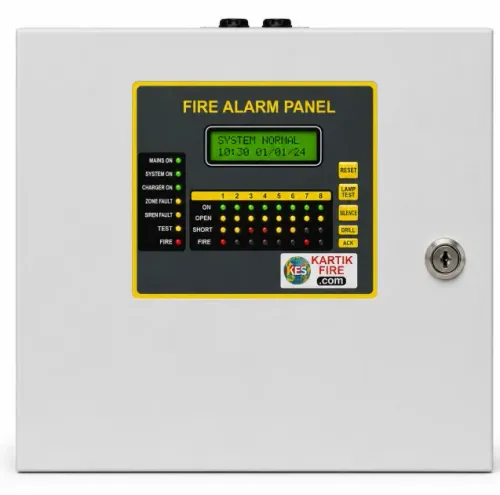
Within a fire alarm system, the detector communicates with control equipment so that appropriate alarm and notification functions can occur.
Smoke detectors are not intended to replace all other forms of fire protection. Their role is primarily detection.
Why Location Matters
Detector performance is strongly influenced by placement.
Ceiling configuration, air movement, room height, obstructions, partitions, ventilation outlets, and the nature of the space can all influence how smoke travels.
Installing detectors without considering these factors can create areas where detection is delayed or where unwanted alarms become more likely.
Placement should therefore follow the approved design and applicable standards rather than convenience alone.
Not Every Space Has the Same Detection Requirement
An office cabin, electrical room, warehouse, kitchen, workshop, and dusty production area may behave very differently during normal operation.
Smoke detectors can be suitable for many spaces, but some environments may require alternative or complementary detection technologies.
Heat detectors, flame detection, aspirating systems, or specialised devices may be considered in particular applications depending on the hazard and design requirements.
False Alarms Need Proper Investigation
Repeated unwanted alarms should not simply be accepted as normal.
Dust, steam, aerosols, environmental contamination, unsuitable detector selection, or incorrect placement can contribute to false alarms.
Ignoring frequent alarms creates another problem occupants may begin treating genuine alarms as routine disturbances.
Facility teams should investigate the reason and arrange corrective action rather than disabling detectors.
Testing and Cleaning Affect Reliability
Detection devices are exposed to their environment continuously.
Over time, dust and contamination can affect performance. Devices may also be damaged during renovation or accidentally covered during painting and construction work.
Routine inspection should check whether detectors remain correctly positioned, unobstructed, clean, connected, and operational.
Testing should form part of the building's planned fire alarm maintenance programme.
Building Changes Should Trigger a Review
Commercial properties rarely remain unchanged forever.
Partitions may be added, ceilings modified, HVAC systems altered, rooms repurposed, or storage arrangements changed. Any significant modification can influence the original fire detection design.
A detector that was correctly located for the previous room arrangement may not provide the same coverage after renovation.
In Delhi's commercial and industrial properties, this is particularly relevant for offices, warehouses, institutions, manufacturing facilities, and mixed-use buildings that undergo regular layout changes.
Kartik Fire Protection Private Limited supports fire detection and protection requirements for different building applications. Selection of smoke detectors should be coordinated with the wider alarm system and site-specific fire safety design.
Effective smoke detection is not simply about installing more devices. Appropriate technology, correct positioning, reliable alarm communication, periodic testing, and maintenance are what allow detectors to perform their intended role in early fire warning.
Keywords