Not every fire should be approached with the same extinguishing medium. The material that is burning, surrounding electrical equipment, and conditions within the area can all affect which extinguisher is appropriate.
Understanding Kartik Fire Extinguisher options and the broader categories of portable fire extinguishers can help facility managers make more informed decisions about workplace fire preparedness.
Why Fire Classification Matters
Fires are classified according to the type of fuel involved. Depending on the applicable standard and environment, risks can involve ordinary combustible materials, flammable liquids, gases, combustible metals, cooking oils, or energized electrical equipment.
The purpose of classification is practical an extinguishing medium that is useful for one type of fire may be unsuitable or dangerous for another.
That is why facilities should select extinguishers according to an assessment of actual hazards.
Water-Based Fire Extinguishers
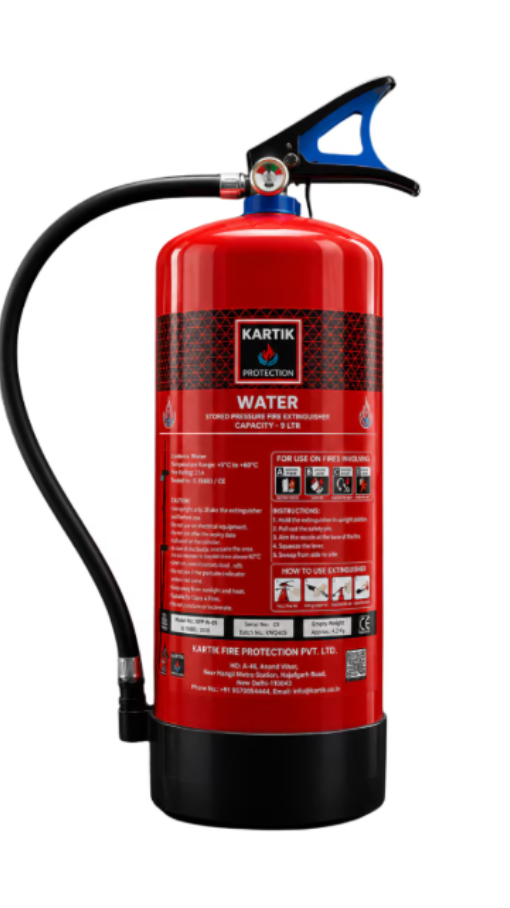
Water-based extinguishers are generally associated with suitable Class A combustible materials such as paper, wood, and certain fabrics.
They can be relevant in offices, educational facilities, stores, and similar environments where ordinary combustible materials are a significant hazard.
They are not a universal solution. Areas containing electrical or flammable-liquid hazards require appropriate assessment before extinguisher selection.
Foam Fire Extinguishers
Foam extinguishers may be used for specified combustible solids and certain flammable-liquid risks, depending on their design and rating.
They can be considered in environments where the hazard profile requires an extinguishing medium capable of addressing the relevant fire class.
The exact product specification should always be checked rather than assuming all foam extinguishers have identical applications.
CO₂ Fire Extinguishers
Carbon dioxide extinguishers are commonly associated with electrical equipment because the extinguishing agent does not leave the type of residue produced by many powders.
This can make CO₂ extinguishers useful around certain electrical installations, office equipment, control systems, and similar risks.
However, their suitability depends on the hazard and environment. Users also need appropriate training because discharge characteristics and handling precautions matter.
Dry Chemical Powder Extinguishers
Dry chemical powder extinguishers can provide broad fire-class coverage depending on the powder formulation and product rating.
They are commonly encountered in commercial, industrial, automotive, and mixed-risk environments.
One consideration is residue. Powder discharge can spread significantly, which may influence whether it is desirable around sensitive machinery, electronics, or equipment.
Wet Chemical Extinguishers
Commercial kitchens can present fires involving high-temperature cooking oils and fats. These hazards require equipment specifically suited to that application.
Wet chemical extinguishers are designed for particular cooking-related fire risks and may form part of a broader kitchen fire safety strategy.
Matching Equipment to the Building
A commercial property in Delhi may contain several risk categories within one building. An office section may have electrical equipment and ordinary combustibles, while a workshop, generator area, kitchen, storage room, or production floor may introduce different hazards.
For this reason, facilities often require a combination of extinguisher types.
Kartik Fire Protection Private Limited manufactures and supplies fire safety equipment for commercial and industrial requirements. Product selection should be based on risk assessment, relevant technical standards, site conditions, and applicable fire safety requirements.
Fire extinguishers are most effective when the correct type is positioned in the correct location and intended users understand how to respond safely. Where a fire is spreading, conditions are unsafe, or there is uncertainty about using an extinguisher, evacuation and emergency response take priority over attempting to fight the fire.
Keywords